First Encounter – Saoirse

This morning I am sitting here with the usual block about how to start writing, only this time it’s extra hard, because I have been wanting to write about Saoirse for months, since I met her in May, actually, right around Beltane; and of course I didn’t; I’m too tired, just bone-weary/worn-out and pun-intended, dog tired, and all the time. Some of that is my own doing, but its still true. I want to excel at everything and I insist on rescuing animals, growing my own herbs and making plant medicines, running Facebook groups and more. I know I need to focus, because this blog and writing about animals, Druidry, nature and the spiritual importance of making your own catfood are all really important to me. I am sitting here (well, since about 4 am actually) fidgeting, looking at Facebook, watching youtube clips about peak oil and goat nutrition (not on the same clip) checking my forums, answering emails and generally not writing about Saoirse.

Mostly because, there’s so much, it’s been so long, and I feel pretty sure by now, anything I say will be…stale,  uninspired, woefully inadequate to the task. Well, nevermind, I’m going to try anyway. The nice thing about a blog – especially a blog that nobody reads save for my circle of friends – is if I fail to convey the thing this morning, there’s always tomorrow. I can try again.

So, basically, anyone who reads my Facebook timeline knows I have become obsessed, disconcerted, completely smitten  with a white tail doe I call Saoirse. She’s been central to my thoughts, daily routines and spiritual life for several months, but most powerfully so (and how like a human is this) since I realized she was in rather a lot of danger. And, unlike the sometimes crazed heroics I and my friends will go to over a domestic animal we love, with this wild creature who appears only dawn and dusk, only in the distance, and often only for a few moments, there is nothing at all I can do, well not in the same tangible sense. I may truck some corn in for her over the winter; I’m raising a bit of awareness on FB. I pray – well, I always pray, but I think I do a better job when it’s not “prayers for the deer nation” but prayers for this one sweet, vulnerable individual…you know, the one with the name and a story to tell, too.

Saoirse.

First of all, I don’t actually have a really good picture of her to share, not yet, and maybe not ever. I have only an old digital camera; I have almost no idea how to use it, and (sniff) no one to show me; I once hoped to do a little photography, to try and capture some of the soul of animals so those who can’t seem to see it, might get a glimpse; at this point in life I doubt I am going to learn anytime soon. Nevermind; maybe it’s somehow fitting that you, reader, get only glimpses of her, as I do . We all know what white tails look like; Saoirse is fairly unremarkable, if that word can ever be applied to anything as exquisite and magical as a white tailed deer; what I’m saying is, if you’ve seen a white tail you have some idea what she looks like. Maybe the specific marks that identify her to me, are best left mysterious. What I can say, is that she first appeared right about beltane of this year, and she looked to be a yearling at that time. She could well be older, I am no expert, but the fresh innocence about her seemed to point to youth.
Maybe it was the time of year, I mean everything feels  fresh and new around May 1st, in the Gatineau Hills.
Here are the pics I got, when I first encountered Saoirse.
P1300393

P1300389

P1300390

As you can see, they’re blurry as Hell – the top one, is a sunset moment across the street from my house, where Indian Creek winds around northwards, lined with white willow and hawthorn, and where I rarely, rarely see white tails in the springtime. I was out there one evening last May, and there was Saoirse, much closer to the house than these pictures show, because when she was standing basically right across the road, I didn’t have a camera to hand. By the time I got one, and got back out there, she had started off, but slowly;I had that unmistakable sense of numinosity one gets when close attention is required, when you absolutely need to pay attention. So, I followed this slow moving, wide eyed faerie creature, as she moved step by delicate step up the sloping hill, around the densest patch of willow, stopping every few feet to look over her shoulder at me, as if to say “Are you with me? Are you still there? Good – now pay attention”.
I hate to admit it, but I think the fiddling with my camera blocked some of the experience, some of what I was intended to “get” that day.
That said; I have been reminded all usmmer and fall, so  assuredly, the deer have my full attention now, and especially Saoirse.
After I snapped the last picture, where she is basically twisting her head over her shoulder to stare back at me, she suddenly bounded off, over the meadows towards the line of forest to the west. I was thrilled by the encounter; saddened the pictures were not clearer.Feeling pleased with myself, I more or less put the thoughts away, as I have to, when I return to my day job and my animals and all the focus of daily life.

Until, the following evening, there she was again.

and the day after that, too. I think she was outside the front of the house 5 times in total at sunset, until I began to get worried about her crossing the fence and into  the road. It’s hardly what you’d call busy here, but when trucks do come by they come quickly, and from a blind spot too, from the north. After that, she didn’t come back to the western landscape.
But by then I had already named her.

Saoirse, pronounced like SER-cha – means Freedom.

And I’d know her, now  anywhere and anytime she turned up. There was to be a good, if  also tragic, summer ahead.tumblr_lz3zb53qf61qargfho1_500

Woodland Wanderings

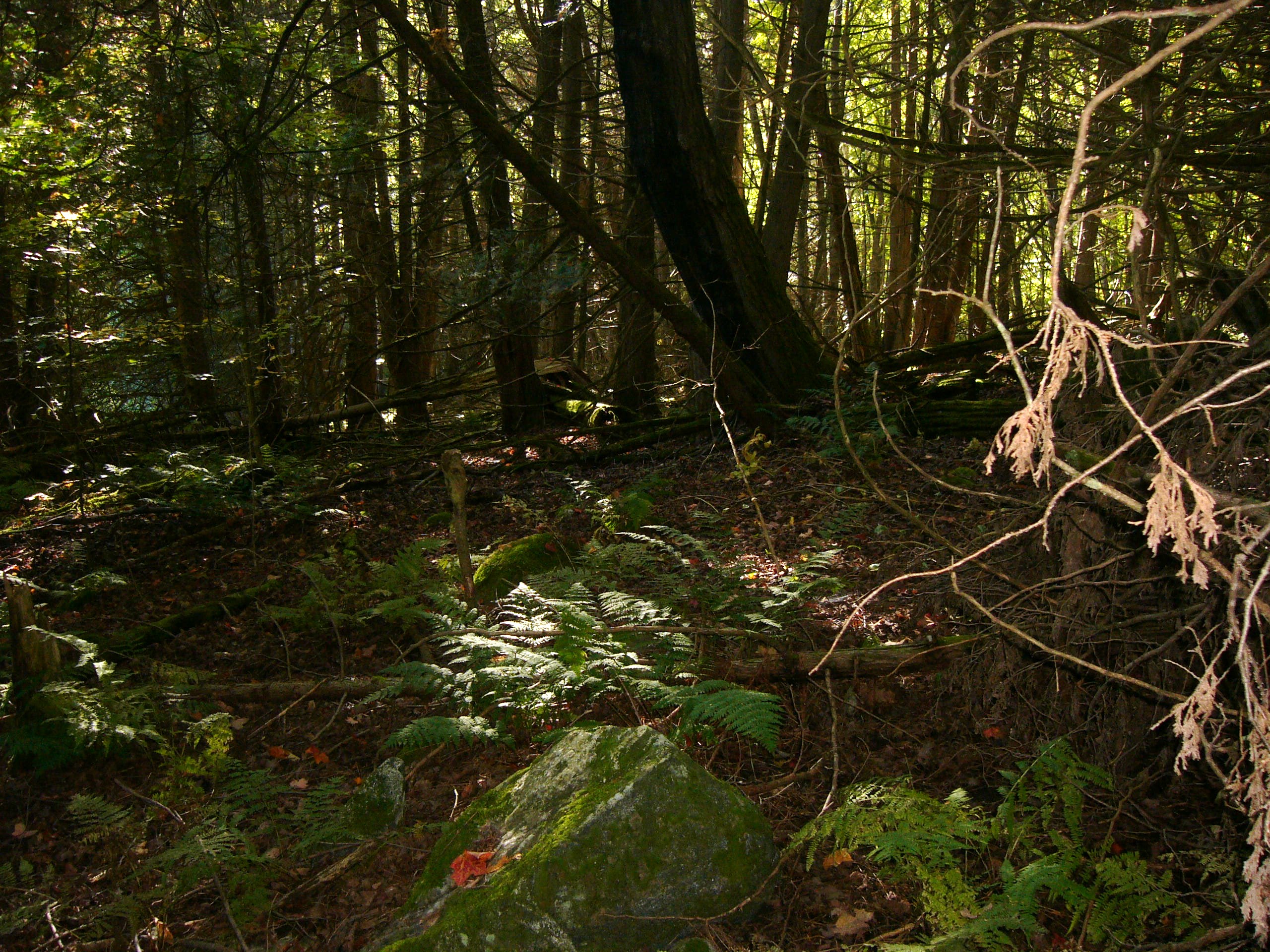
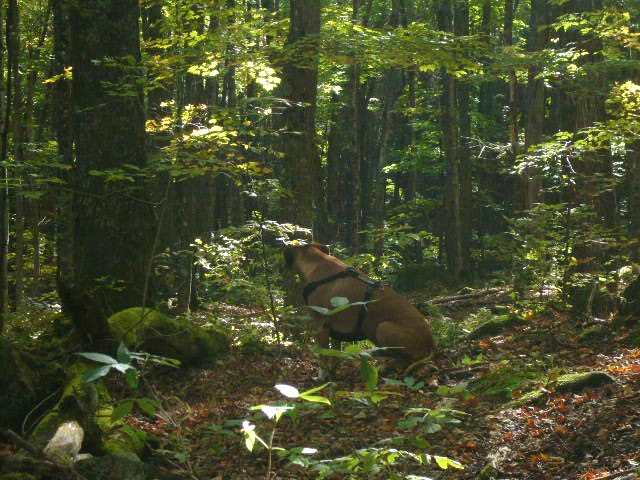
I try to get out to the forest with Danny at least 5 times a week, for a good 90 minutes offleash for him – and exercise, spirit-time, and foraging/wildcrafting  for me.I try to rotate where we go, so he can have a sense of adventure, and ensure there will be lots of new smells for him to check out. Without a car this past while,we’ve been limited, but fortunately we do  live basically surrounded by forest – it’s still good! Today we went to an area about a 7 minute walk down the road – onto land that’s been part of my family for something like 200 years. We walk past the house my grandmother was born in, and onto a trail she would have taken many times to go from that home to HER grandparent’s farm. Needless to say these woods and fields feel very ancestral and in-spirited to me – and Danny, well, he just loves the whole deal (smells, sounds, excitement, chance to be a dog!) Here are  some images and experiences from this mornings’ wander.

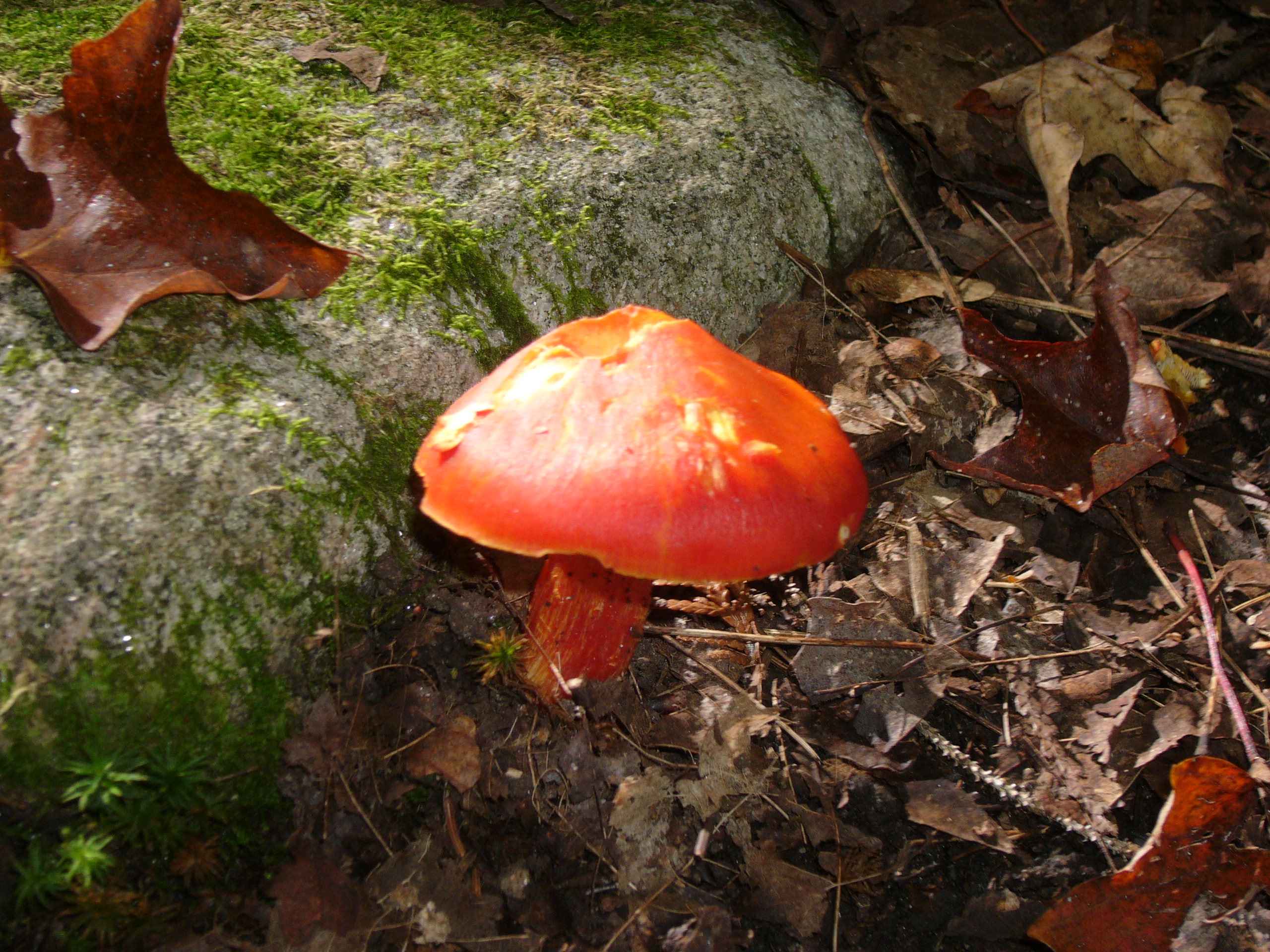
First – the mushrooms.

P1310459

P1310445

P1310462

P1310421

I am nowhere near as capable with mushroom ID as I am with plants in general – I have some ideas what these are, but without thumbing through the books I’m not going to say for sure. Those more knowledgeable than I, feel free to comment!
These last guys were cradled inside the opening – womblike opening – of a cherished beech I consider a Guardian  tree of the woods she stands in. It’s so lovely to me that the ancient Celts considered her “The Mother of the Woods” – associated Beech with ancient knowledge and tradition..certainly she feeds many wild creatures, including grouse, rabbits, squirrels, deer and porcupines. Impulsively I brought some home – leaf and nut – and then read  that keeping a piece of beech as a talisman brings good fortune to the wearer. I had not known that, but perhaps my instincts were good today; I’ve felt called to this tree over and over, often resting nearby on our walks, and so I’ve taken up the task of learning everything I can about her. The energy I felt while standing beside her in contemplation was certainly maternal. ❤P1310425P1310424

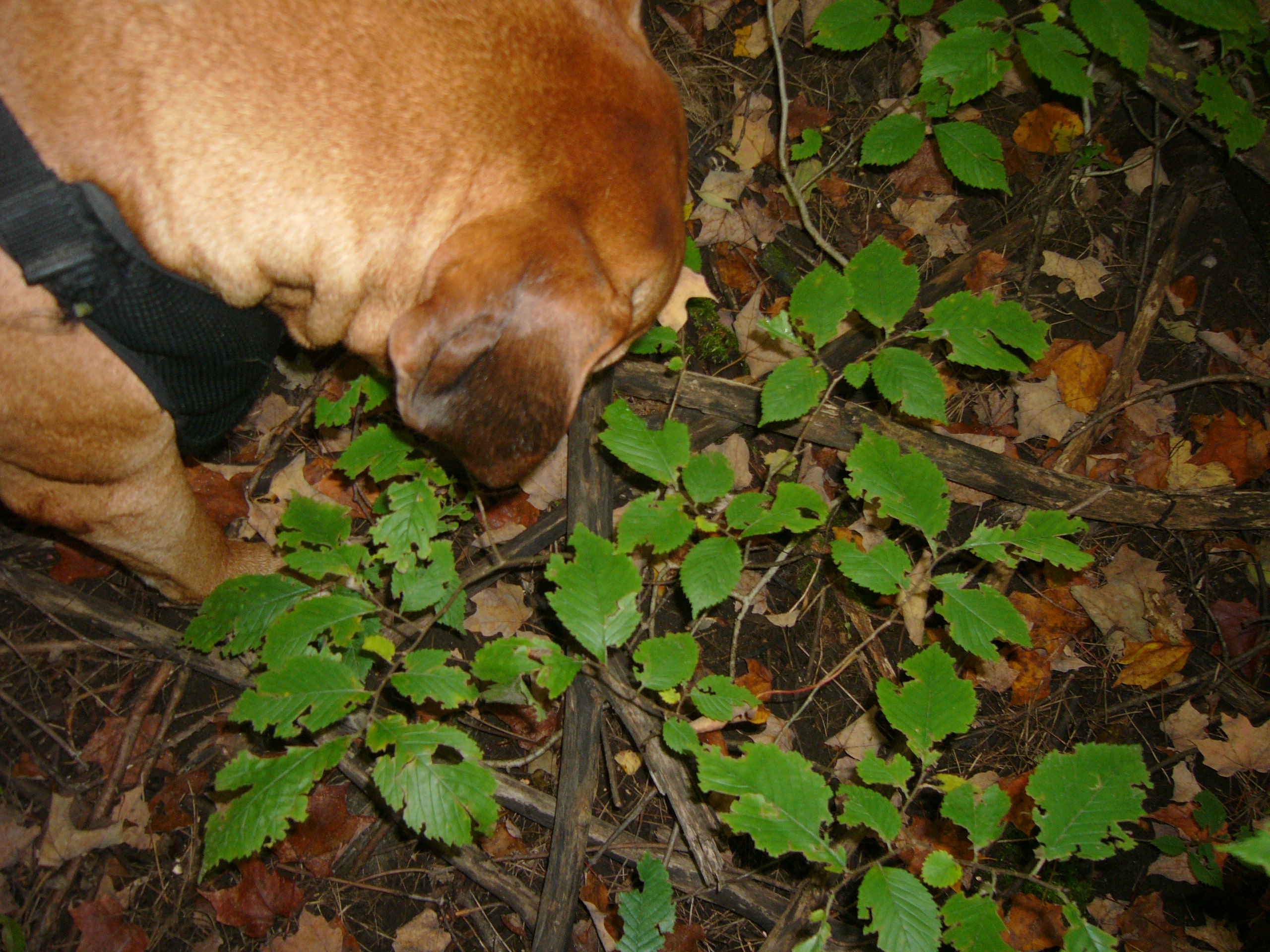
On the tree front, Danny continues to search out and consume young American elm leaves. I am sure this indicates that he has a parasite. Today I photographed him earnestly eating his leaves; they’re pretty dessicated now, but still have the sandpapery feel that is characteristic of this tree. I think I’ll drop off a sample to the vet next week and see if my instincts are correct.P1310417P1310418

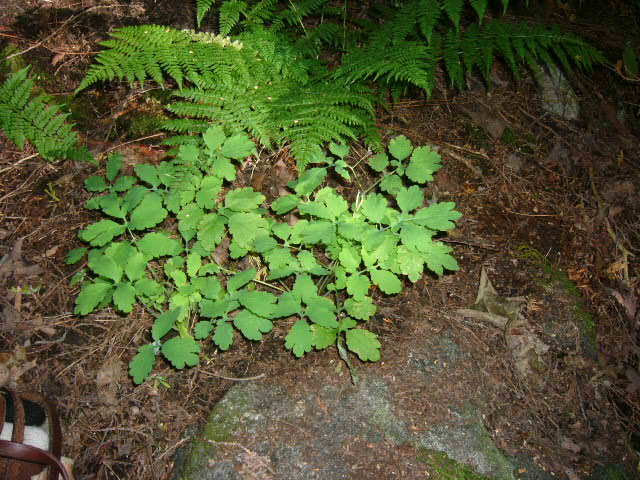
I found a lovely patch of Chelidonium majus – Greater Celandine – and couldn’t resist a shot:
P1310409

Reading a while ago that “fern” is associated with  the Autumn Equinox (Alban Elfed, or Light of the Water) and it gave me pause, as I personally associate the many fern species that grow around here with spring – fiddleheads! and, they are often the first to emerge from under the snow. But looking around today I was struck by how many are still thriving under the forest canopy, still strong and green – perhaps this is why the association? At any rate, they seem to be first to come, last to go – and I find their many varieties both beautiful and fascinating.

P1310412

My handsome Dan almost camouflaged in the woods – deep in thought, I believe; or perhaps more accurately, in oneness with the wild, and so an absence of thought, but a fullness of being:
P1310440

and, his Mom – where she is happiest, too…although I don’t think I look it here, I really am!

P1310433

Leaving the woods and back into the field; this passage is very magical and hard to capture. A large and beautiful Agrimony grows smack in the middle of the entryway – pondering now what that represents.   🙂 You can’t see the Agrimony here, but I’ll be sure to write more on  hr later this year.(A plant I make extensive use of for dogs and people).
P1310464

Another morning, another song of celebration. Home to hot tea (me) and eggs, chicken and sweet potato (Dan)  – I give thanks for this beautiful world, every rock, leaf, cloud, bird, mammal, reptile and insect – every being – and every day. Sad to see the Light half of the Year depart, but the Dark holds much magic for us all to explore…and much hot chocolate, many warm fires and woolen blankets, and the stars….

Happy Autumn, I hope you get to spend time in your own magical neck of the woods. Don’t forget the cider!

Late Bloomers

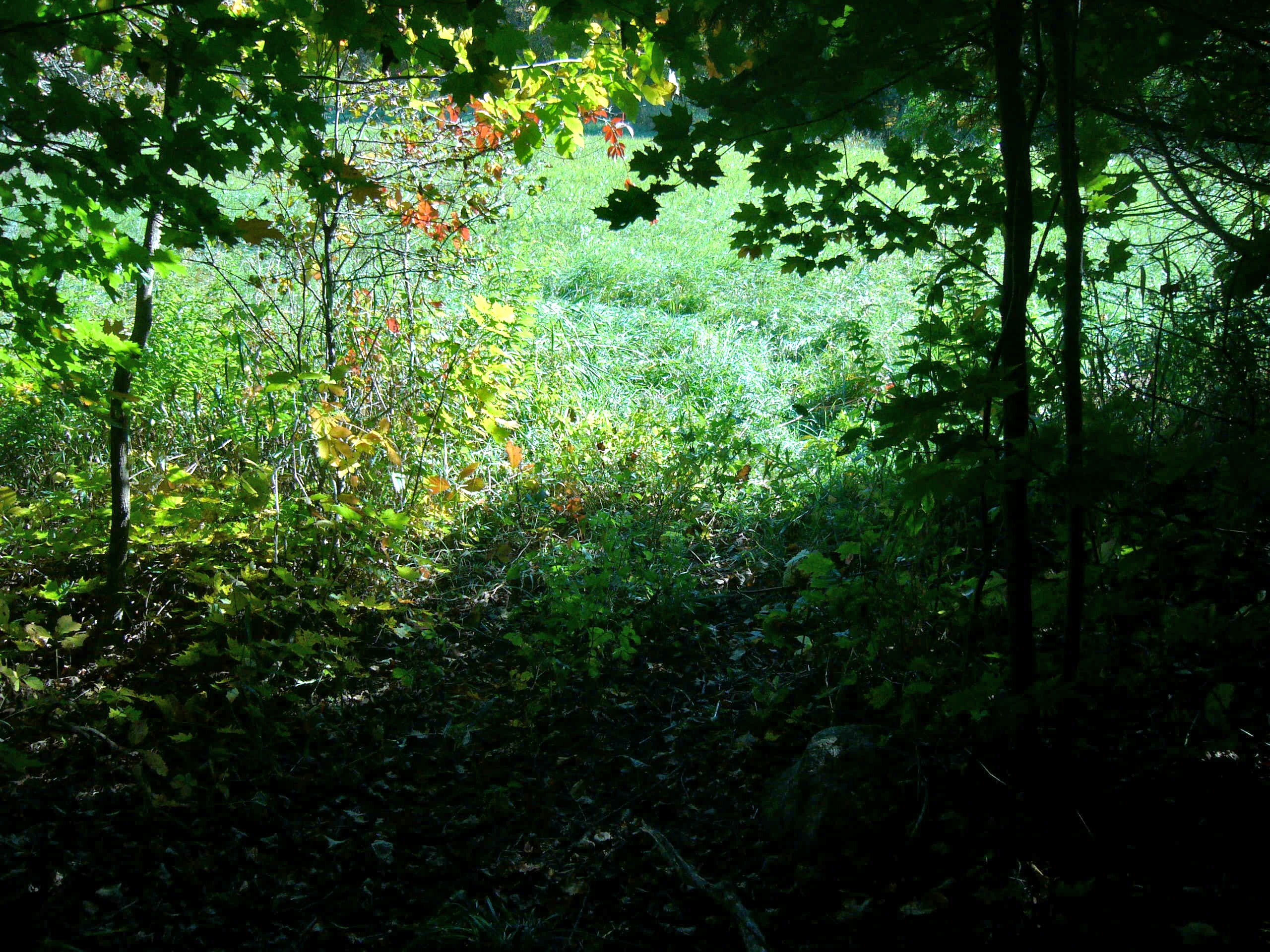
Such a strange season it has been –  and the weather right now, just post-Equinox, is unusually warm and mild. All week I’ve been finding many beauties still turning their flower-face to the sky, still filling the fields with colour. From my garden and the surrounding forests – a few blossoms who are not ready to sleep.
P1310391

Orange hawkweed, Hieracium aurantiacum

Multiple medicinal uses, still underused herbally and regarded widely as a “noxious weed”.

P1310399

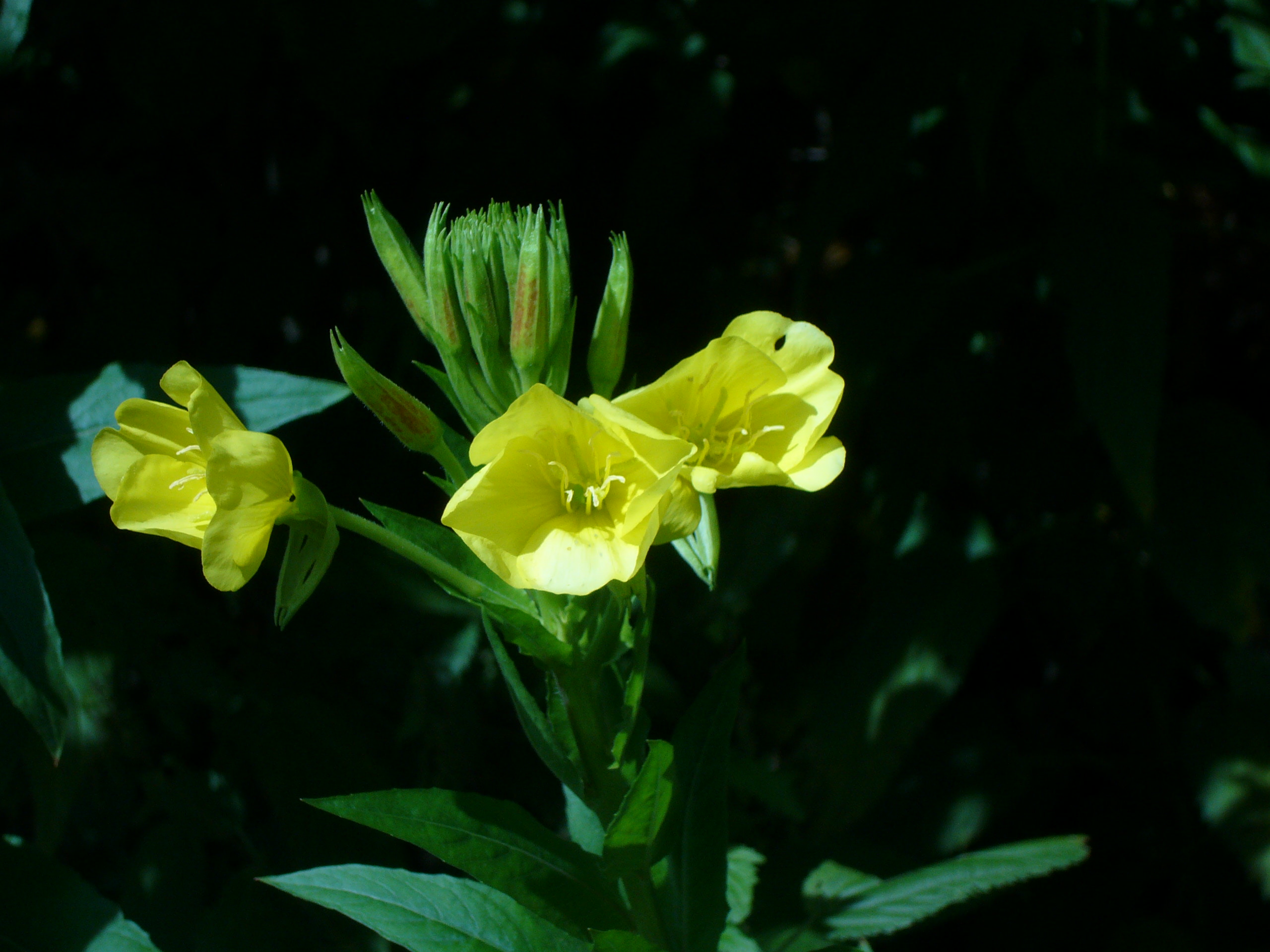
Evening primrose, Oenothera biennis; I grew these beauties from seed and use for a wide variety of actions, notably the vulnerary effect on the whole GI tract, gentle nervine restorative ( used over time)  – for someone like myself, who tends to burnout/adrenal exhaustion and has GI  problems(reflux,  gallbladder) Oenothera is pretty much a specific. An ally! And beautiful in the garden right now, too.

P1310401

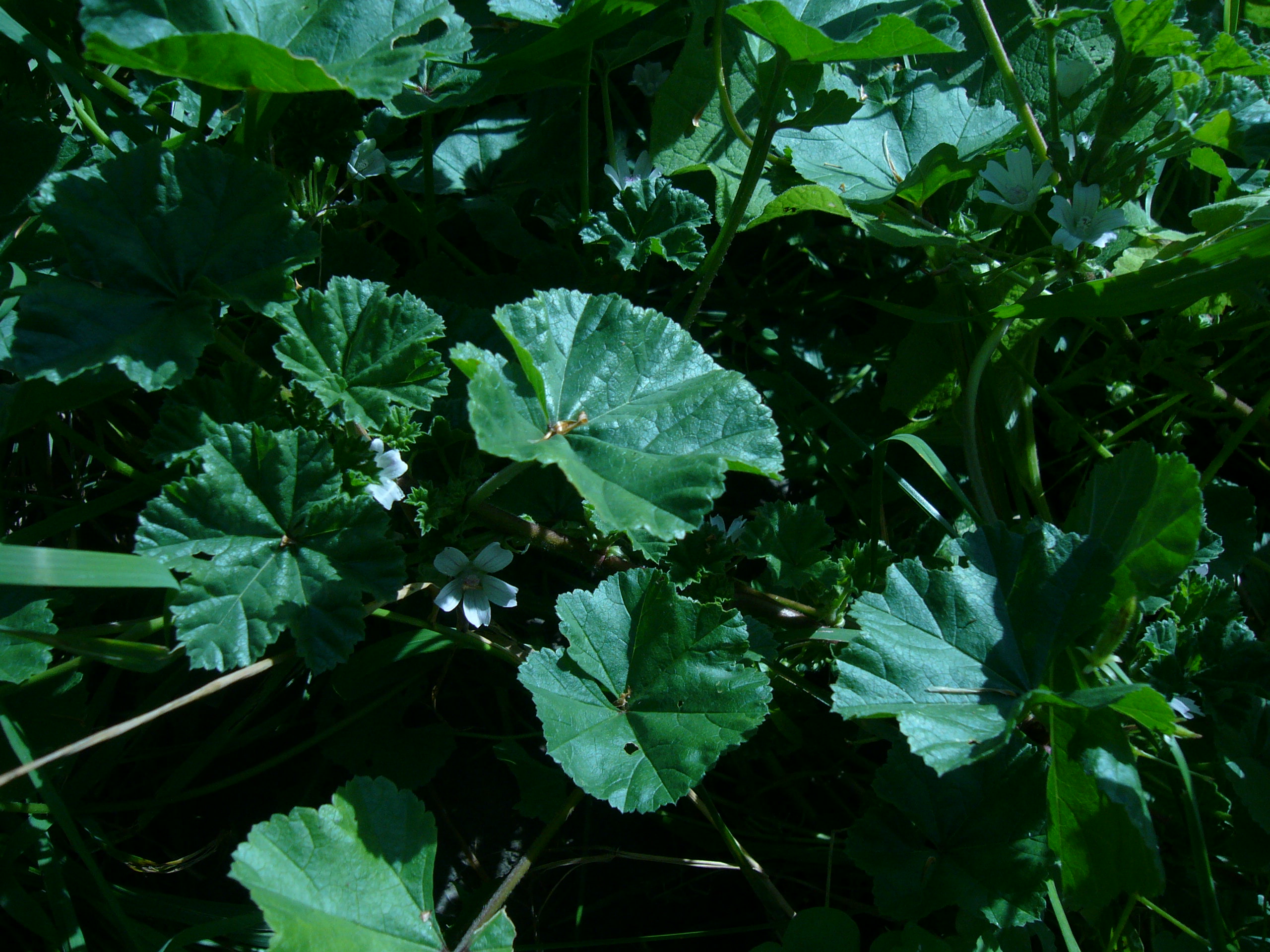
There’s a wee, shy mallow flower hiding in the centre of this darling Malva neglecta I have – well everywhere, but this one is right beside the compost. She’s definitely hanging on until frost.

P1310403

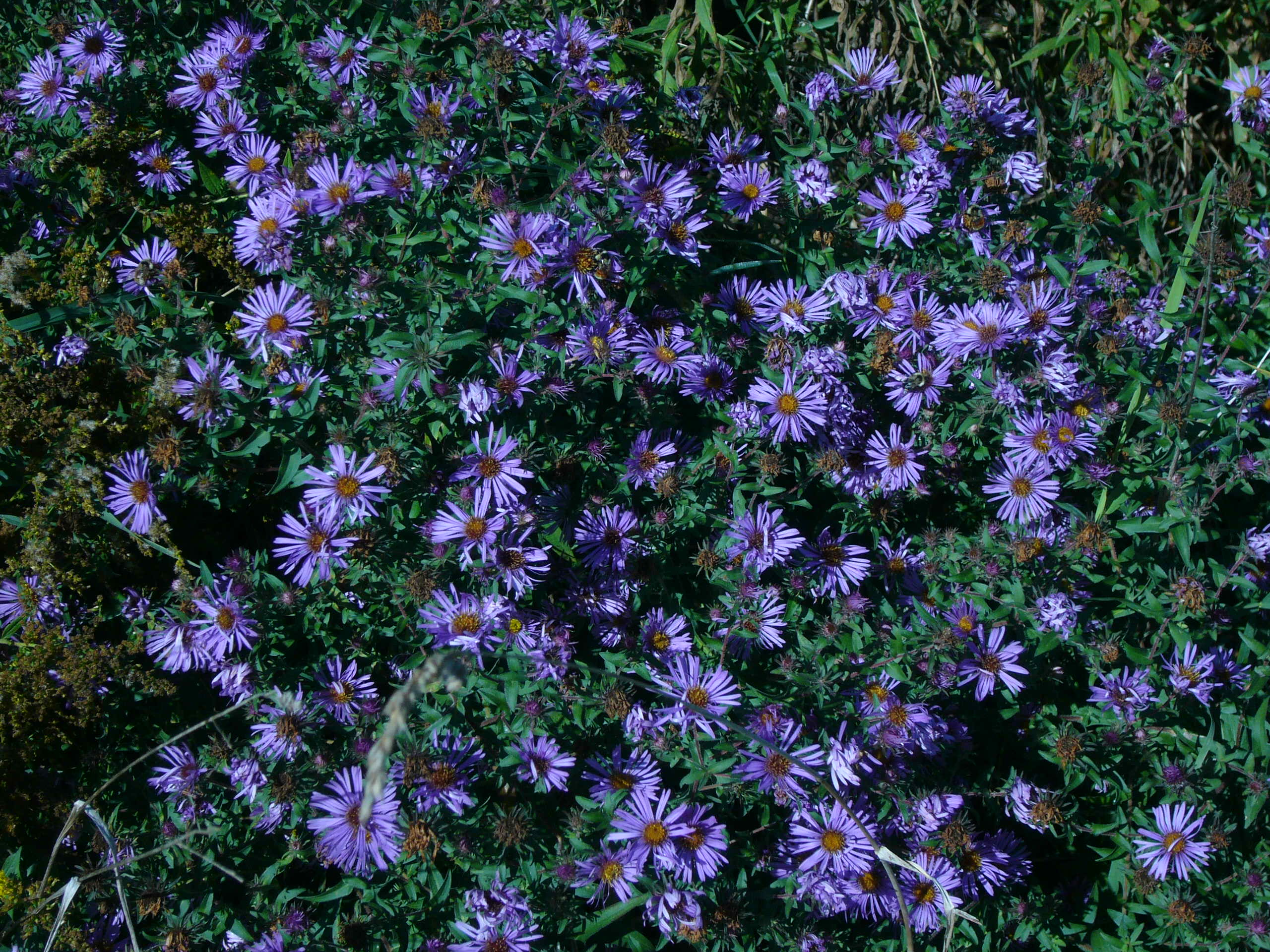
New England Aster – a glorious batch I found today on our walk (who could miss the bright purple against the fall landscape of rust and orange and brown?) Symphyotrichum novae-angliae is a powerful ally for a variety of systems – notably the lungs – and has a broad range of medicinal applications. In working with local asters I have often referred to and been inspired y Michigan herbalist Jim MacDonald’s works, which anyone interested can find here:  http://www.herbcraft.org/aster.html
I have not harvested any this fall – I will, but I hate so much to take them from the bees.

P1310334

A few cheerful Calendula blossoms beside the Lady’s Mantle, who has the good sense to withdraw into sleep. I always have more Calendula than any other plant, and I always make use of it – tincture, salve, skin washes, more . I love that she stays around to brighten the garden as long as she possibly can.

P1310289

Constantly frustrated with the lack of Yarrow locally (herbicide free, plentiful and healthy) I grew my own this year! Lesson to me; Alchillea millefolium really does need 18 inches room between babies. I have lots of it now but it’s too close together, so I’ll be thinning it very soon. Here’s a beautiful blossom, and next summer, we’ll get more. 🙂

P1310302

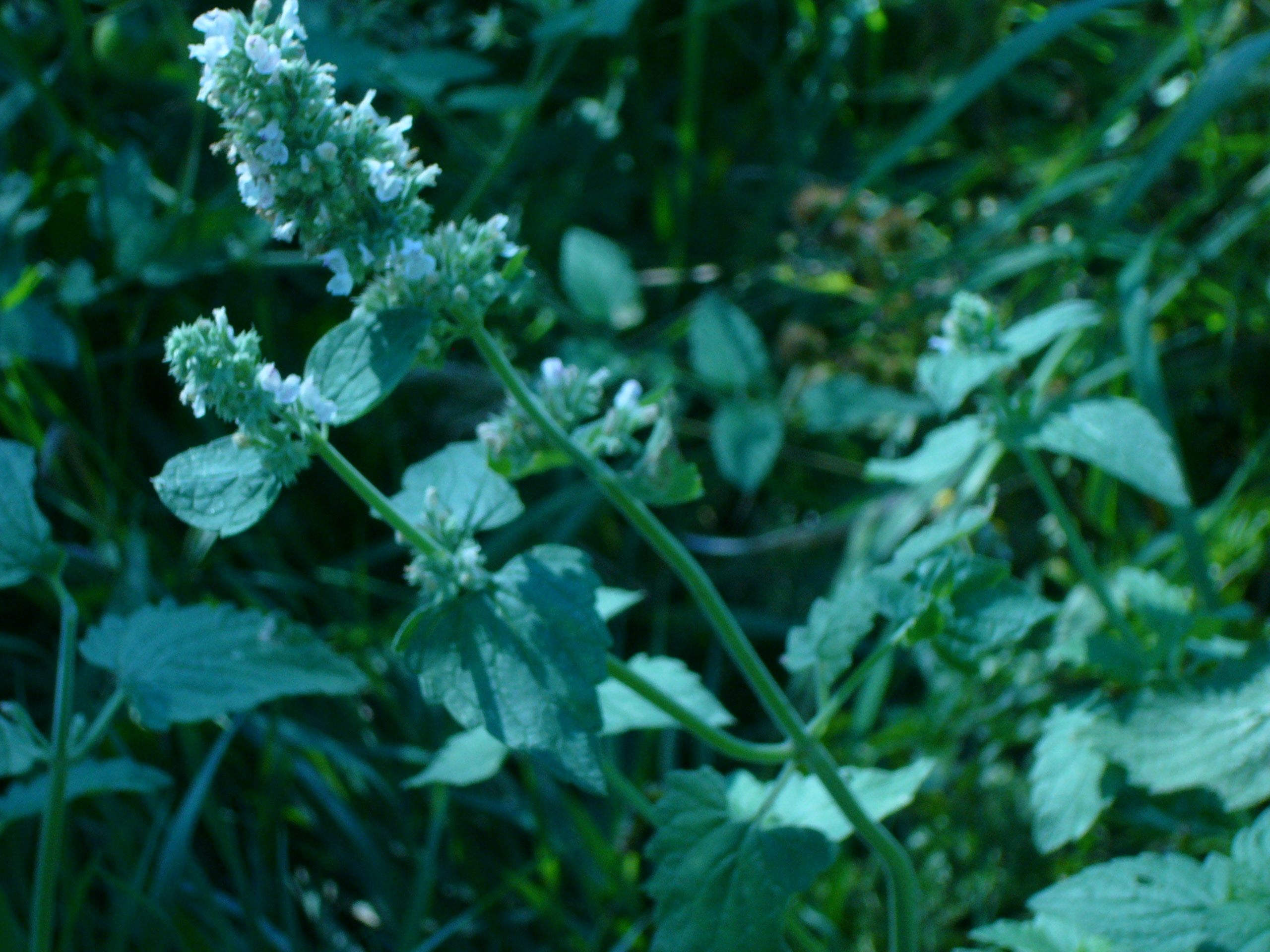
One beautiful blossoming Catnip plant – I love this herb so much it’s nudged into my Top Ten. Amazingly, this summer(with 7 cats) I grew plenty.

P1310286

Althea officinalis – my gentle and beautiful ally – offers up a last bloom.

As we welcome the dark half of the year and celebrate with heartier fare, apple cider and the soft, gradual closing down of our urge to be always on the move – it’s a welcome and happy reminder that summer is brief but beautiful, to look into the woods and garden and see these sweet flowers, feeding bees, reaching for the sun – saying goodbye, if only for a while.

P1310310
Mithrandr watches me photograph the garden. 🙂

Goodbye, Shadow-tail

Day before yesterday I was out back, walking with Dan as I often do, through the small woodland to the east, that opens up to a wide, gorgeous vista of pasture, hawthorn-lined winding stream and a horizon of farflung, misty Hills…  walking, a little uncomfortably, as my boots sank to the ankle in newly softened snow, as my feet slipped from time to time on slushy stone beneath the melting mantle of white.  Winter has finally begun to fade, and the inevitable transition time is both joyous and messy, energizing and stinky – spring, like any birth is filled with contrasting energies and sensations. For Daniel, it seems, the joy greatly outweighs any perception of difficulty – he sinks, once in awhile, to his shoulders in a soft bank of snow, looks furtively toward me as if to see if I’ve noticed – and on he goes. The more it all melts, the more stinky wet earth he can revel in, the happier he is. I walk alongside him in admiration and amusement.

I love these woods, I think I’ve said that. The Hills really – although, at times (like right now) they are so haunted as to be almost too painful to bear. As we walk, Danny oblivious to ought but the smells, I feel the ghosts all around and within me – the hopes I carried up here 21 years ago, the house I first lived in, in a place called The Swamp – the dream of a family I once felt, when first with my partner, and his little house with his sister – the loss of John, the loss of Lila, the traumatic death of Luke. Time starts to tunnel for me – it’s as thought I can feel, palpably, the pain, hope, sorrow, joy and happiness of all these years, loves, dreams and defeats, all at once, as I walk through slushy trails and try not to slip. But you know, I try to stay balanced and grateful. Somedays it’s too easy..other days, especially around April, not so much.
Still, somehow, the forest always heals.

Often, the walk into the forest is  mixed up with fragments of workstuff, anger, petty concerns about my daily life, the pressure of a never ending to-do list, but the walk back is clear, pure and unfettered by monkey-mind. It takes a half hour amongst the pines to get myself sorted; then I can feel, again, not just whirl about in my head, like a maniac. It’s always a disappointment to know I have to return to the maelstrom – but I’ve chosen much of this, and the rest, the parts I didn’t – whoever said life was going to be simple, fair, or easy?
So – day before yesterday, I am walking back from the sit-spot at the end of the trail, calmed and contented, when I see her. I’m not sure how Dan missed her lifeless body, lying facedown in the snow beside a recently cut hemlock – overwhelmed, perhaps, by other intrigues – or maybe, as it’s always possible, I was meant to stand still a moment in prayer.  I wish I’d had a camera, but then I think – why? Her little body, tail  across her back in what struck me as a gesture of farewell, will stay with me, I won’t need a record.  A small dead squirrel, just a step off the trail; unusual. What was she doing there, amongst the piles of severed branches, the lush green against the pure white snow, a bloody streak of black that seemed so out of place?
And then it hit; the waves of empathy, universal love and some kind of …knowledge about this individual, what hr life was like and how she died… I have never really known  where it comes  from, but it’s there; I’m riveted, standing over the small black body – not just feeling sadness , but knowing her life. Before I roll her over to see the bullet hole straight through her body, I know; this tree was her home – and I know, too, by her enlarged teats there were babies in the nest with her. I dare not go to look for them. I am overwhelmed with pain.
This is a small wooded area, that stops abruptly and opens to pasture and meadow, as I described above. I feel, no I know, how happy this wild being was in her tree. Other areas nearby are rife with animal activity – bear scat and claw marks on trees; wolf, coyote and deer fur against favored rubs, occasional carcasses and quills from porcupines; beaver-chewed tree stumps, much, much birdsong. But this little part of the local forest is quieter. It’s owned by a local who has no qualms killing a  den of foxes, two parents and a litter of kits; chopping down a venerable old oak, spraying herbicides (legal and outlawed varieties) everywhere, targeting goldenrod and wild carrot and Solomon’s Seal. Here in this place, animals, though present, have learned to be scarce.Few visit regularly and fewer still, make their home. I bless the land every single time I pass through.

I can feel my little squirrel rejoicing in what she experienced as her quiet,safe home in this tree.

So few predators. So wild and sweet. I can feel her exuberant, clever squirrel-like happiness.
And then the gunshot.
So, I ask myself, weeping, why did he need to kill her? Was it not enough to take her home and, most likely in March, her young ones in their nest? Why kill her as well? And leave her bloody body tail up, face down in the snow.

Honestly?  this was a tragedy. It was for her, anyway – and I can feel it. Don’t go telling me to consider what squirrel-medicine means; I’ve learned some from them over the years, but this isn’t about me.It’s not about how I should start hoarding a little and  on and on. It’s about how my species thinks of and treats the Others.
Danny catches up, I leash him and have to coax vigorously to get him away. We have to go home now, anyway; the sun is dropping, I have to get dinner started, and everyone fed.

I’ll come back, I say to myself, come back without Dan, I’ll lay a wreath here, say a prayer. But part of me knows I won’t, that I can’t stand the empathy and I go nowhere without Dan. So I carry the pain home with me, a sharp hurt in my solar plexus. I know a million squirrels die every day. I know I can’t save everyone. But it’s the story here that hurts – her innocent love of her life,  and trust in this bit of the wild. And the callous taking of it all from her, like it was nothing.

I send you my love, little tree-dweller…shadow-tail, iora glas, atchidamoy…clever one, tail -in- the- air.  You deserved much better.
I carry you with me, now too. I keep your memory within.

Outaouais Herbalists – second Meet- up December 2

It has been a while since the first meet-up,  how easily time can  get away from us, with all our busy lives. This is the season now to slow down, unwind, take time for ourselves and family. Samhain is soon going to be upon us – tomorrow! and, after that, we move on to
the beginning of winter.. In anticipation, I’d like to invite everyone
to a pre-winter herbal get-together in beautiful Wakefield. This time we’ll meet at the historic
Earle House. Like the last get-together I hosted over the summer,
this will be an opportunity to meet face-to-face and share ideas with
others who are interested in plant medicine. This time, the focus
will be on herbs for colds and ‘flu – managing the symptoms, as well as prevention. We might use some of the
“herbal helps” I described in my last post on the subject, for those newer to the topic. I’d love
to hear if anyone has tried any of these yet, and how they worked.

Date: Sunday December 2nd
Time: 2pm – 5pm
Location: Earl House at 1 Valley Drive in Wakefield

I appreciate knowing how many to expect, so I can book space at the Earle. Please let me know if you’re planning on coming!

Herbal help for colds and flu

The cold and flu season is upon us, and every couple of weeks or so someone at the Earthsong requests help with herbal ideas to help them through the worst of it. Last week a plea came through for  some ideas on prevention, and the ensuing  thread  covered  the usual concepts – watch your diet, make sure you get enough of all essential nutrients, avoid getting overtired, nourish the immune system with gentle support such as astragalus, a little extra zinc and Vitamin C, warming beneficial drinks such as turmeric milk and chai with additions to strengthen immunity…garlic, chicken soup.  But what about those times when all efforts to resist a bug fail, and you find yourself tucked away at home, miserable and sick – as invariably some of us will over the winter? What about the sore throat that makes life a misery, the hacking cough that worsens at night and won’t let you sleep, the misery of clogged sinuses, the body aches, the lingering misery that doesn’t respond to our usual firstline defenses?

Herbal medicine has much more to offer than the usual “garlic and Vitamin C” advice, and can target specific aspects of the individual’s symptoms to offer the strongest natural relief, helping the sufferer get through the duration of the illness with minimal distress. In this article I’m looking at  remedies – some familiar and others may be new – to broaden the choices for those wishing to help themselves back to health. I will discuss the Actions of some popular herbs, with an eye to  sharing how they work, aside from simply telling you “ Elder is good for colds “ we’ll look a little bit at how and why. First theme is this; not all coughs, sore throats, cold bugs overall are  the same. Dry hacking coughs need a different approach from loose, productive versions, and – ideally – call for different herbal strategies. Those studying herbalism here will already be familiar with Actions of herbal medicines, and the importance of choosing specifically, but anyone can learn to think in terms of “what does this herb  actually do  – and  is it optimal for me?”  While we select herbs for their specific primary actions a lot of the time, we also need to be mindful of their secondary effects – and that takes a bit of study. The herb you choose should be optimal for your symptoms and condition – but also work optimally for you overall. As a quick example, people with autoimmune disease may not do well with plants that stimulate the immune system.  But again this can be a matter of dosage and duration.

Review/summary: When someone asks “What can I take for a cold?”  a good herbalist will look at the symptoms the person is experiencing and then find herbs that have Actions suitable to help these symptoms.  How this is done is a very big topic and too much to go into in an article this size, but I’ll be using some terms which may be new, so – briefly – here are some of the Actions we look for (rather than just seeking ‘herbs for colds’).
1)      Diaphoretics – promotes perspiration,  opens the pores,  some promote circulation, others relax tension and some do both – but the idea is, to help the body release      sweat

2)       Demulcents – soothe and ease inflamed tissue (sore throat, for example) moistening, cooling and sometimes relaxing

3)       Expectorants – help to expel mucus from lungs and sinuses

4)       Antimicrobials, antivirals – helps the body to resist or eliminate pathogens

5)       Anti-catarrhals – assist the body to reduce production of mucus, generally from ear, nose and throat

6)      Immune Strengtheners – boost or modulate immune function

7)      Nervines –  the ones we’re using will have a beneficial effect on the nervous system, in this case generally relaxing and sedative, to assist with rest and  sleep

8)       Anti-spasmodics – prevent or minimize muscle spasms, used here in cough remedies to control spasm and help with sleep

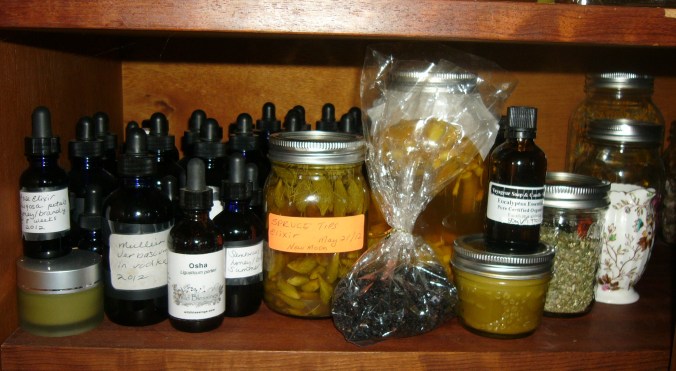
This is the primary group of Actions we will be looking for to help with the symptoms of a cold.  All of them are Biomedical Actions; there are other groupings of Actions that are essential for a herbalist, but most who are simply seeking help for a cold will want to start with these. We can use herbs from the above group to warm up and dry moist, soggy tissues and dry up phlegm; or, apply them to help cool down – soothe and ease a hot flamed throat;  relieve tension and pain, especially headache and bodyaches: stimulate  peripheral circulation and help  the body sweat; clear toxic build up from the body;  relax the body and promote sleep, and more. The vast majority of herbs I will recommend are readily available, and once you have used them  on yourself or a family member, you will want to build a herbal Medicine Cabinet and keep them on hand year round. Many, such as yarrow, marshmallow and mullein are useful for  numerous other ailments and conditions, and should be part of any first aid herb cabinet.
It’s important to remember that many of these herbs function on several levels, so the classification below will focus on the primary action in context of the ailment and tissues.

We will look at how to take these herbs – in teas, tinctures, elixirs, syrups, pastilles, steam inhalations, poultices and more.

1)      Diaphoretics. This is the group I often look to first, and the time-honoured elder/yarrow/peppermint tea falls into this category.  The term refers to the action of some herbs to encourage or promote sweating.  The action of opening the body, helping perspiration to flow, is achieved in part by the process of stimulating circulation of capillaries near the surface of the body.  Best taken in hot (or at least warm) tea, sipped throughout the day, diaphoretics include the great multi-taskers Yarrow (Achillea millefolium) and Elderflower   (Sambucus Canadensis) used in combination or alone, depending on what you have on hand. One of the great things about learning the Actions and Energetics of herbs is you don’t need to go look up what to use for what, and rush out to the store – if you have  Peppermint, use that, and if it needs warming, add ginger!  But yarrow and elder (flower and berry) are two herbs I’m never without. One of the great combinations for flu and colds with fever.
In the course I completed last year from Dominion College, just about every single herbal  treatment for any kind of cold and flu was infused and then “poured hot upon ½ teaspoon cayenne”. At the time I found this a little quaint, and I still think not every cough, cold, sore throat and upset tummy needs it, but in cases of blocked sinus with headache, deep lung congestion/infection fever with a real need to sweat, I generally do infuse the yarrow and elder and pour it hot over cayenne. Cayenne (Capsicum frutescens)  should not be included in the diaphoretic tea formula if there is any evidence of stomach ulcer, and I am cautious if there is a history of cardiac problems like arrhythmia; otherwise, use as needed. Ginger is warming, and diaphoretic when added to hot water or the tea, too. Make sure you rap up really well to help the sweating process too!

Looking more deeply, in the next installment, we’ll see that some Diaphoretics are classed as relaxing and others, stimulating. How to work with Vital Actions and symptoms is a whole article unto itself; for the purposes of this article, elder and yarrow can be used together to gently promote perspiration in most common colds and flus.

Some other  common herbs (not an exhaustive list) with diaphoretic action include:

Angelica (Angelica Archangelica)

Hyssop  (Hyssopus o.)

Pleurisy Root (Asclepius tuberosa)

Boneset (Eupatorium perfoliatum)

Catnip (Nepata cataria)

Ginger (Zingiber officinale)

Thyme (Thymus vulgaris)

Sage  (Salvia o.)

 Basic recipe

To make the tea, simply place a teaspoon of each herb  in 8 ounces of boiling water, cover,  and steep for 8 – 12 minutes. Serve warm with raw honey, if desired. To make an infusion – greater medicinal strength –  use a half ounce of each in a pint of boiling water , and allow to sit for at least 30 minutes, strain and serve at about 3 ounces every half hour. I use tea for milder colds and the stronger infusion for more severe cases or at the onset. Often with phlegmy, ratting cough I will add the ginger or cayenne as well.

  Immune Strengtheners

Ask the average person what to take for a cold, and the first answer is either VitaminC  and/or  echinacea.  The idea here is to provide a stimulating effect to the immune system, to help the body fight infection. And that is something Echinacea does indeed do well. However, many other herbs stimulate, modulate, balance and strengthen the system, and Echinacea may not be the right one for the individual. Studies have shown best results when Echinacea ( angustafolium) is taken in tincture, right at the onset of symptoms, and in doses higher than the label indicates, sometimes as much as three times higher.

My feeling is, this aspect of herbal cold care is very personal.  Astragalus, reishi (and other) mushrooms and elderberry are better choices for many individuals,and one should exercise caution even with these, if the patient has an Auto-immune condition (diabetes, multiple sclerosis, Grave’s , lupus). I tend to fall back on Elder – but this time emphasize the berry, in tincture or elixir, taken in fairly high dose but at intervals throughout the day.  While the flower helps move fluid with it’s diaphoretic action, the berry goes to work strengthening – balancing, really – the immune system,  so my standard approach is to add a teaspoon of elixir or dropperful of tincture 3 – 5 times daily as needed. Elderberry tincture is a must-have for any herbalist and readily available, but elixir is something we make ourselves, and so I include the recipe here. I first learned how to make it from Kiva Rose, so I reference her recipe here:

Elderberry Elixir

By Kiva Rose

http://bearmedicineherbals.com/another-gratuitous-elderberry-post.html

“Ingredients

For your elixir, it’s helpful to have on hand:

▪    A pint canning jar (or other glass jar that seals well)

▪    Fresh elderberries (dried can be used as well, simply use about a third of the amount, or about 2.5 oz to follow the 1:5 proportion method for dried plants).

▪    About a pint of high quality brandy (the better the brandy, the better your elixir will taste), depending on whether you’re using fresh or dried berries.

▪    Appr. 1/3 pint of raw honey (or to taste, as you prefer)

▪    A good stirring spoon


Step by Step Instructions

  • •    First, fill your jar all the way to the top with fresh elderberries.
  • •    Now, pour the honey in slowly, stirring as necessary, until the berries are well coated.
  • •    Next, fill jar with brandy, stirring as you go, until all air bubbles are released.
  • •    Now cover the jar with a tight fitting lid, and shake carefully to finish the mixing process.
  • •    Let macerate in a cool, dark place for four to six weeks (or as long as you can stand to wait.
  • •    Strain, reserving liquid. Store in an airtight container in a cool, dark place.


Take 1/4 – 1/2 dropperfull of Elixir every two to three hours at the first sign of illness. You MUST take the Elixir frequently rather than having a bigger dose further apart, it just won’t work that way. Use the same dosage if you are actively ill. For a general preventative dose, I suggest 1/3 dropperfull every four hours or so.”

This basic recipe is the one I use for all kinds of other elixirs that are wonderful to have on hand for a cold or flu; I like to use ginger, rosehips, sage, pine as well as elderberry, and add them in as needed, too.

Antimicrobials/Anti-virals

In this category we have one of the classic cold/flu remedies, often taken in soup or honey – of course I’m thinking of garlic! In treating our own or loved one’s cold by working on all the levels,  we want to include herbs that inhibit or help kill off the  virus and/or bacterial agent responsible for it. Garlic is great in home made soup, added not long before serving, or in honey, or as part of a “Fire Cider” vinegar recipe to clear sinuses and open the upper respiratory tract. But garlic again is not for everyone, it can upset some people’s stomachs or be generally too warming (just like ginger and cayenne).

To make Fire Cider, and I’m not sure where I learned this because recipes abound! But the jist of it is, to use something like the following (and you can certainly experiment, no hard and fast rules here):

Take about 1/3 cup of grated horseradish (and be careful with the stuff, it is HOT!) a quarter cup chopped organic garlic (if you can get organic) and a half cup each chopped onion and ginger. Place all in a sterile quart jar, add a teaspoon of cayenne pepper, and cover all with a good quality apple cider vinegar.
Cover tightly and let it sit for about 6 weeks, a minimum of four and up to 12.

Once  it’s opened, you simply strain into another sterile jar, or separate into two if you plan to keep them separate for different uses. Now you can use the Cider mixed with honey to help clear sinuses and for the strong antimicrobial power of garlic and horseradish, you can use it as a compress on the chest, you can even try a little bit (start small, a half teaspoon) straight up if you need a jolt of something HOT to clear congestion.

 Garlic (allium sativa) is wonderful if your constitutional type does well with it. Two recipes I use extensively( I sometimes have problems with garlic but love it so much I use it anyway) are Garlic Honey and Garlic Soup. For the honey, simply peel  all the cloves from one head of garlic; chop coarsely, and place into a sterile pint jar. Pour a good, preferably raw local honey over top, mixing well with a knife or chopstick. Let it sit for about 3 weeks and you have a lovely medicinal honey.Take a teaspoon straight up for relief of sore throat and sinus congestion.

NOTE: Fresh chopped ginger,  monarda, sage, thyme and many others make excellent honeys as well!

For the soup – this is one I’ve made for about 30 years now so I have to admit I don’t recall where I got the basic idea from. I vary it up all the time, and I love it, but it’s not to everyone’s taste. If you love and tolerate garlic, do try this; the cooking eases it’s pungent raw taste (and so it’s not as sinus-clearing) but combined with chicken broth it does pack a healing punch for colds and flu. And, many find it delicious.

Garlic Soup ( bugs-be-gone)

You need:

about 4 whole bulbs of garlic, up to six if you’re a freak like me

3 Tablespoons good olive oil or butter

about a quart of home made, rich chicken or turkey stock

4 egg yolks

plus whole plain yogurt, chopped almonds and lots of parsley to top

All you do is:

Crush the cloves and slip off the skins, Toss the smushed cloves into a Dutch Oven size saucepan (stainless steel, cast iron or enamel, please) with the oil and saute oh- so -carefully, making sure not to brown (browned garlic is bitter tasting). When the garlic is soft, add the stock and simmer about half an hour, again very gently. Cool, and then squeeze the stock through cheesecloth or a sieve, into a bowl.

in a separate bowl, beat the egg yolks until thick, with a whisk and pour into the large pot. Start slowly beating in a Tbsp or two at a time of the now cooled garlic broth. When you have about a half cup beaten in, you can add the rest of the broth is a steady drizzle. Heat to the boil, and remove. As soon as it’s cooled but still nice and warm, serve in large bowls topped with a dollop of yogurt, chopped almonds and parsley.

If you like, you can add salt; other herbs to taste, of course, but I prefer it straight up. Good tasting medicine!

A couple of lesser-known  but very important anti-microbial herbs deserve mention here as well. These include Usnea (Usnea barbata, around here anyway), a lichen found all over the world, and commonly referred to as Old Man’s Beard. It offers strong antimicrobial action and is useful in all kinds of cold and flu preparations.  It helps remove bacterial infection and inflammation in the mucus membranes and thus clear the lungs of heat and fluid. Another herb not as commonly known outside the herbalist’s community is Osha (Ligusticum porteri,) sometimes known as Bear Medicine. Osha is found in the Southwestern USA and in some parts of the Rockies; Osha is diaphoretic , anticattarhal and expectorant (here we go with the overlap of Actions) and helps clear mucus from the lung. The root is extremel y powerful medicine for the lung but this is not a herb widely found in commercial use, and  so you may need to look around a bit for a source.(Mountainrose  Herbs is one, resources at end of the article) but well worth the effort.

Usnea barbata

Osha Root (ligusticum porteri)

You can try both Usnea and Osha in tincture, but  they are bitter. This lovely recipe from Jim McDonald combines both, with the added punch of Echinacea- and tastes much better. Thanks to Jim for letting me share this.

Oshanasnea Maple Cough & Cold Syrup

This is a really nice cough & cold syrup… while some people use honey and some people use a simple syrup made with sugar, you simply can’t beat the flavor obtained by combining Osha and Maple Syrup.  This stuff is drinkable…

While the only musts here are Osha and Maple Syrup, this is the formula I first started with.  I often play around with it, and can say that either replacing the Usnea with Wild Cherry Bark (or just adding it to the rest) also tastes pretty darn good…

Combine, in equal parts:

~Osha tincture

~Echinacea tincture

~Usnea tincture

Add 1 “squirt” (about 30 drops) of this combined tincture to each tablespoon of pure Maple Syrup (any grade will do, but Grade B has the strongest Maple flavor).

This syrup can be used as needed as a cough and cold remedy, and is quite delightful in flavor and effect (i.e. your kids aren’t likely to complain…)”

Demulcents

This category  refers to those herbs that offer soothing, inflammation-easing properties and can reduce the pain of a sore throat or irritated, inflamed sinuses or bronchial tubes.  Demulcents contain high amounts of mucilage, which in turn creates that slippery, slimy feel these herbs produce when combined with water or honey. Slippery Elm (Ulmus rubra) Marshmallow (Althea officinalis)  and Licorice (Glycyrrhiza glabra)  are most often used in pastilles, syrups,  electuaries and teas  to help relieve some of a cold’s most difficult symptoms. A wide range of plants have some demulcent properties, but for colds these tend to be most popular and effective. They can be used alone, or in combination with cooling astringents such as rose and/or antimicrobials like sage. When I  first started making my own herbal pastilles, I used mostly slippery elm with licorice and rolled the  “dough” onto a marble board like one does for cookies,  then cut out the lozenges with a cap from a soda bottle. This makes pretty pastilles but is time consuming! The method I use now can be found here:

http://www.learningherbs.com/sore_throat_remedies.html

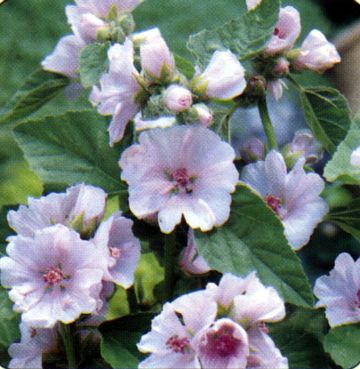
Marshmallow,  Althea  officinalis, in flower

You can of course, make a tea with slippery elm or a cold infusion with mallow, for example. They combine well in formulas for lung catarrh and cough, and are indispensable allround for easing the discomfort of raw, inflamed tissue.

Expectorants, Anti-Catarrhals, Anti-Spasmodics

These three types of Action are grouped together  because they are often used in formulation (along with a Demulcent herb) to address the nasty coughs and lower respiratory discomfort of colds.  Briefly, Expectorants help expel mucus from the lungs while anti-catarrhals work on the sinuses and throat to thin and expel build up.  There are a range of herbs that perform these  functions and it can be confusing to know which to select.  I would suggest assessment of the type of cough, and choosing from herbs that loosen a tight chest and those that assist in drying up a boggy, rattly one. The chief herbs I use  for coughs and lung inflammation due to a cold are:

Mullein (Verbascum thapsus) – anti-inflammatory, expectorant, demulcent, mildly sedative –  the  dried leaf is one of the best allround medicines for respiratory conditions. David Hoffman suggest combining it with Lobelia, Coltsfoot and White Horehound; I avoid Coltsfoot because of the PLAs (pyrrolizidine alkaloids, which my herby friends will know are the same compounds present in comfrey and can make ingestion of those plants problematic). Take 1-4 mls of mullein leaf tincture three times a day, or make an infusion of the dried leaf – 1-2 tsps  in a cup of boiling water – three times a day. Mullein is especially helpful for tight, dry coughs where little mucus is produced.

Elecampane (Inula helenium) – expectorant, diaphoretic and anti-bacterial, the rhizome of elecampane is called for when the lungs are boggy and there is a lot of phlegm coming up. Hoffman recommends 1-2 ml of the tincture 3 times a day.

Wild Cherry(Prunus serotina) – a very popular ingredient in cough syrups, wild cherry bark has a sedative effect on the cough reflex, easing the misery of  repetitive coughing. Use in syrup, or take 1-2 mls in tincture up to 3 times a day.

Angelica (Angelica Archangelica)- the dried root is also diaphoretic and so useful in coughs with fever – a Teaspoon of the dried root decocted in a cup of water, can be taken up to 3 times a day for cough with fever.

White Horehound (Marrubium vulgarum) – an expectorant herb with antispasmodic and bitter (digestive) properties,  hard to take in infusion but good in syrup or tincture (down the hatch!) Use alone or in combination; alone take/give 1-2 ml of tincture 2- 3 times a day.

And to help with the painful spasm of repetitive coughing, Lobelia (lobelia inflata) in a formula helps lessen the severity of  the attack without entirely suppressing the cough. All of these herbs can be taken in tincture form individually or in a formula, in syrups, electuaries and infusions, although some, like Horehound, are notoriously bitter. The point here is, to research and learn about all the Actions  useful for helping with colds and flu, not to be comprehensive I any one area. MANY herbs possess expectorant, anti-catarrhal, mucolytic or anti-spasmodic actions, which we choose and how we use them depends on the type of symptom. Is the cough dry and hot? Loose and watery? An assessment of the type of symptom is our tool for choosing a herb or combination that will help most effectively.

Relaxing Nervines

This group is included here because during the acute stage of a cold we so often cannot sleep well; partially due to the long days spent doing much less a than we are used to, and partially because symptoms will worsen at night and we cannot sleep due to coughing and unpleasant congestion. Once we’ve eased those symptoms with poultices, steam inhalations,  soothing pastilles and cough syrups, we may still require a little help drifting off (and staying there).

This category is called “relaxing” nerviness, because, well, not all nerviness actually help  relax us. Think of nervines as herbs which have a beneficial effect on the nervous system (generally) and you will see that some, like caffeine (in moderate doses!) actually perk us up. Those are Stimulating nervines – so the ones that help us unwind,  that relieve tension and soothe, are the relaxing sort. From this group I generally use…

Chamomile (Anthema nobilis)

Skullcap (Scutalleria lateriflora)

Motherwort( Leonorus cardiaca)

Vervain  (Verbena o.)

Passionflower (Passiflora incarnate)

Rose (Rosa rugosa)

Lavender (Lavendula angustifolia)

Mugwort  (Artemisia vulgaris)

My own sense of which nervine to choose if you or a loved one has difficulty sleeping through a cold (and sleep is so badly needed when the body is healing) is to select from whichever herbs you know to be effective and helpful. During an illness is not time to experiment and risk an allergic reaction, or as in the case of valerian, a reaction opposite to what one is hoping for. I like a tea made from chamomile, skullcap and passionflower, but have also used motherwort, rose and sage when that’s what I had. Teas, warm, rather than tincture  are my preferred method of administering nerviness. Try one of these straight up, look for a good commercial blend such as BIJA, or blend up your own. And rest easy!

 Very Helpful Things

1)      Some kind of herbal steam is often a lifesaver for me when I’m congested and can’t sleep. I generally throw in a handful of whatever I have that is anti-microbial and stimulating (mucolytic) and that often means thyme! Eucalyptus is another perennial favorite, and I have had great results with an interesting blend from Kiva Rose, who suggests the following:

1   Part Bee Balm (Monarda spp. the spicier the better)

1     Part Moonwort (Artemisia spp.)

1     Part Rabbit Tobacco/Cudweed/Everlasting  (Gnaphalium spp. and related species.)

You can just take anywhere from a pinch to a small handful (depending on your tolerance of the smell and the strength of your herbs) of each and toss it into a small pot of just boiled water (about a quart) and cover for a few minutes. Then take a towel and place your face (carefully) over the open pot. Be careful not to burn yourself but to get close enough breathe in a lot of the vaporized essential oils. Try to stay under there as long as the water is hot and there’s plenty of steam. If you can’t, take short breaks while covering the pot and then go back under.”
http://bearmedicineherbals.com/simple-herbal-steam-recipe-for-congestion.html

This was an interesting one for me, as I have both Monarda and Mugwort in my garden and Everlasting grows wild around here everywhere. I recommend trying this bled if you even have two of them, but all three are easy to find and or grow – and have myriad other uses in your medicine as well. (NOTE: this summer I faced one of the worst, no THE worst allergy season in my life,and used rose petals, sage, mugwort and lemon thyme regularly for easing  relentless sinus misery. It was absolutely lovely and smelled divine too. Highly recommended).

 2)      Compresses and Poultices; the classic is mustard or onion, but compresses (gauze or other material soaked in a hot infusion of the herb and applied to the chest) or poultices ( chopped warm herb applied to the area and held in place with flannel or other cloth) can be made from a multitude of plants.

Here’s the classic method of making an onion poultice – I include this because it uses simple and readily –to-hand ingredients, and is amazingly helpful.

Materials needed:

• One medium  onion

•  2 Tbsps  ground corn meal

• Apple Cider vinegar, 2 Tbsps

• Cheese cloth

• Flannel, wool scarf, or cloth

• Small amount of Olive oil

Instructions:

Peel the onion and place into a skillet that has been coated with the tsp  of vegetable oil. Bring the skillet to a medium heat and sauté until they are clear.  Do not brown.

Sprinkle in the of cornmeal and vinegar.  Stir well until the onions are mixed  – you want a  poultice that holds together and won’t fall apart once it is placed on afflicted area. Take the pan off the heat. Cut a piece of cheese cloth (or old cotton T-shirt) twice as big as the area to which the poultice is to be applied. Drop some onion poultice onto the cloth and fold it in a neat package. Make sure that the poultice is at least 1/2 inch thick and not so hot as to burn the skin.

Place poultice over the area to be treated and  cover with flannel or wool. Keep on at least  20 minutes or until the poultice is cool.

3) Rubs

No article covering herbal remedies for the common cold would be complete without a mention of chest rubs – which can of course also go on the forehead, back of the neck and head, anywhere the sinus pain manifests – being cautious not to get it in the eye, and avoid using the hotter versions (eg with cayenne) around the face. A basic herbal rub I make and use a lot in the winter is made with pine sap infused into olive oil mixed with beeswax and a few drops of eucalyptus oil added as it cools. But I will happily use any sap from our  many local conifers, including Hemlock, White spruce and my favorite, Red Pine (for this purpose).

To Sum Up…

A long but still very introductory look at  herbs and the Actions we seek for helping with cold symptoms. Instead of thinking “I have a cold, better get the garlic and Echinacea” we can consider what symptoms we have, and what Actions are needed to address them. It’s much easier in the beginning to think about actions for specific issues, rather than memorize long lists of which herb does this (especially given that the average herbal lists about 15 Actions beside each one!)  I hope this article is helpful in thinking about herbs this way. Some excellent resources, many of which I used in putting this together, below.

Have a healthy winter!

Resources

Online:

www.herbcraft.org

Jim McDonald’s site is a goldmine of resources on so many aspects of herbalism. Do check out his marvelous collection of articles (under the Link Seeds and Stems, bottom of the page). I thank Jim for all his hard work and the Osha syrup recipe, too.

www.mountainroseherbs.org

A great supplier of all kinds of herbs, including the harder-to-find Usnea and Osha.

www.bearmedicineherbals.com

You all know I’m a huge fan of Kiva’s beautiful blog and approach to herbalism. This blog is such a gift, really a course in itself for those new to herbalism altogether, or like me, new to this way of practising it. Indebted on many levels – do check this out, please.

Dominion College – coursework for the Chartered Herbalist programme

Texts

Medical Herbalism, David Hoffman

The Book of Herbal Wisdom, Matthew Wood

Twelve Characteristics of Spiritual Maturity

1. Body awareness – gnosis regarding the fluidity of the material, knowledge of what we can and can’t change,  transcendence of the time trap (physically)

2. Feelings of souldeep pain and sadness for the suffering of all creation, but especially for suffering caused by human failing. Sometimes overwhelming.

3. Episodes of inexplicable bliss despite acute awareness of personal and universal suffering. GRATITUDE.

4. Stability, meaningful work, acceptance, utilization.

5. Deep and easy relationships with people  and ability to walk away from outmoded ones (and the wisdom to tell the difference). Detachment as required.

6. Comfortable, refreshing and regular sleep.

7.    Fewer scattered dreams and far more “big” or lucid dream episodes. recall, and by now, the skill to understand them.

8. Grounded-ness, physical mastery, in increasing levels according to practise; but, you would not have gotten this far without a lot of work, so likely you know how to use rest, exercise, breath and food to adjust your vehicle by now.
9. Decreased “self talk.” You’ll find yourself talking to your Self more often. You’ll suddenly realize you’ve been chattering away with yourself for the past 30 minutes. There is a new level of communication taking place within your being, and you’re experiencing the tip of the iceberg with the self talk. The conversations will increase, and they will become more fluid, more coherent and more insightful. You’re not going crazy, you’re just  moving into the new energy.

10. Feelings of connectedness at the same time, you are detached. No loneliness. Increased  need for solitude but not to rest and escape, but rather, to WORK.
loneliness, even when in the company of others. You may feel alone and removed from others. You may feel the desire to “flee” groups and crowds. As Shaumbra, you are walking a sacred and lonely path. As much as the feelings of loneliness cause you anxiety, it is difficult to relate to others at this time. The feelings of loneliness are also associated with the fact that your Guides have departed. They have been with you on all of your journeys in all of your lifetimes. It was time for them to back away so you could fill your space with your own divinity. This too shall pass. The void within will be filled with the love and energy of your own Christ/Buddha/Gaia consciousness.

11. Intensified passion – but with equanimity, not the scattered pattern of the neophyte. Focused, committed, action directed by love. Now that you know what “love” really is.

12. A deep longing to  stay here and help. And the strength, wisdom, courage and love to endure it as long as it takes.

Excerpt – One Crow, Joy

A soft, grainy-grey winter morning it is, and I am standing, facing south, looking out from my bedroom window at the sleepy little blink of a village called Rupert. Really all I can see behind the thicket or brush and trees, are a few scattered lights, the hint of some dwellings. Directly before me is my own scrubby yard, filled with elder and balsam poplar and goutweed; a little farther down, a clump of young oaks and cedars, and that towering white pine who stands guardian to the south. My friend and ally, I feel this tree forms a barrier between me and the world “below” – the towns, cities and world outside of Rupert – south of the village. Not far behind him, tucked into the small valley formed by one of our myriad rocky hills and outcroppings, is the Community Centre – a humble place indeed to locate one’s spiritual transformation, and therefore all the better. There is a stream in there, very small and red with iron; the yard itself was once tended to with great love and care, but since I have been here has fallen to great disarray. The loveliness closeby  is marred to the point of absurdity by the presence of the World’s Ugliest Fence, thrown up with a minimum of effort by someone who cared not for beauty of this world if it meant some extra work and expense. Still, there is much loveliness remaining; the trembling aspen, whose song brings me more peace than anything I know in the outside world, the wild roses, the willows across the road, framing Indian Creek. My Libran Ascendent cannot but focus on that fence in the midst of the verdant beauty here. ..still, this is not a story about discontent; this is a story about redemption. And so, I will not talk about the fence, but rather,the spirits who lived within it’s confines; the sweetness and joy it contained, and still does.

On quiet, hushed mornings such as this one, it is as though I can still see them behind the Ugly Walls; his face impassive, somber and alert, those old, old eyes; and then hers, alight with the ever-present smile, the seal-like gaze only apparent when her cheerful and  animated meandering finally stopped a moment. I can see them,milling, watching,  wandering – and they are there.

Nothing is ever lost or forgotten.

I stand looking out this window on a softly snowing weekend morning. There is much to do; there always is, but I need this space apart today. My eyes glance down to the old vanity table in front of me, at the items placed so carefully there. Most of them, I recall from where they came; the chunk of crystal on the left side, for example, was the very first  I ever purchased, at a New Age store in Toronto, probably 25 or 30 years ago. The terra cotta candle holder with the angels painted on the side was a gift from an old and cherished friend, one who got to travel everywhere while I just stayed in my room, as the song goes. The amber candle holder I bought in honour of one of the many gods I love, but then it migrated to this space, a shrine in it’s own way too.  The stone angel – I don’t remember her, or rather where she came from.  She’s so perfect though, I am glad for the inspiration that moved me to bring her home.

The heart shaped stones, now those I found on one of my many walks through these hills. And they too are perfect, sitting as they do in their neat and rustic symmetry, in front of the main items on this table; two funerary urns, one periwinkle blue, tall and sleek; one sandstone and sturdy, shorter but somehow more solid. On the blue urn, a Christmas tree ornament sits waving her magic wand; a gossamer fairy, ethereal, beautiful and full of gentle magic, much as the soul she decorates was in her time on this earth. The Sandstone urn has no decoration save an old silver locket draped around its neck, a locket which, if opened, reveals two kinds of fur tucked inside, one short and golden, the other longer and soft black. The fur of the beings whose ashes lie within.

On the left, Lila, and on the right, Luke.  My dogs, my spirit-friends, loves of my heart,  my teachers.  In this silent, soul-filled and timeless morning,  I take a moment to pray for them, only to send love, only to remember. To look back, to where – perhaps – it all began.

It starts, and it goes on forever, with Lila.

Working with Animals – getting started

In my work with animals I am often asked what herbs people should get for a “start-up” kit – not exactly First Aid, which entails specific items for emergencies, but a general kind of “what herbs (and in which form) should I buy or make to get going with helping animals”? So, in this article I’ll make a few suggestions, useful for anyone just starting out, and hopefully some ideas for the more advanced herbalist, too.

Working with cats and dogs is, on one level, much like working with people; before we administer anything herbal, we have to evaluate the individual . We need to consider not just the herbs themselves, but which form to use, and of course, what dose to use. Beyond that, we want to consider if the herb will be used longterm or short, and in the case of the former, carefully evaluate any health conditions the animal may have. This is important with short term herbal choices as well, but when a specific formula or even one plant is used longterm, it may not only exacerbate existing conditions but promote the development of new ones, in the carnivore.  High oxalate herbs should never be used longterm with dogs or cats, for one example. But the core of our work is to establish the form – given the fact many animals simply will not be persuaded to ingest infusion – and also which dose we will use. The latter here is quite simple for me – I start at the low end of the therapeutic range and build levels only as indicated.  I tend to use tincture or glycerite most of the time, but some herbs (Marshmallow comes to mind) are probably most effective given in infusion, so  get creative about how to slip it into the food.  I use  green tripe, special home made recipes, or honey – not peanut butter, cheese and other foods not optimal for dogs. In cases of urgent need, and with herbs such as milk thistle that aren’t so great in tincture – I use capsules. Depending on the animal, herb and condition, we can look to tinctures, glycerites, infusion, capsules and pastilles – but let’s start with a few basics the Animal Herbalist can rely on in a very general sense.

Note: this list does not cover medicine-making, but assumes you are just working with purchased products – at least for now. Because this article will go on forever if I start to recommend doses , I will cover  the range in my next installment; for those who want to start right now, an excellent resource is listed at the end of this article.  For now, here’s the basic starter kit. I’ve emphasized local herbs and those that do double duty, for example chamomile as a relaxing nervine (to help an anxious animal relax) and as a soothing carminative for upset stomach and gas.

Tinctures and Glycerites:  Echinacea, Mullein leaf, Hawthorn berry, Calendula, dandelion (root and leaf) plus, a nervine , respiratory and a urinary formula, and perhaps one for pain. I say “perhaps” because there are many kinds of pain and it is always best addressed according to type; that said, a general formula can be a blessing, in acute or chronic scenarios. If you prefer glycerites to tinctures – there are pros and cons to both – some lovely products available here:

http://www.herbalist-alchemist.com/shop/index.php?shop=1&cat=13
A few examples of formulas I like:

1) This is an excellent nervine formula, but you can of course work with individual herbs and experiment. I encourage you to do so! http://www.animalessentials.com/#products:66

2) Mountainrose Herbs has a line of herbal formulas I have used with animals over the years, and especially like the Bladder Care and Respiratory Blends here: http://www.mountainroseherbs.com/extract/combin.html

3)  For pain, I often combine Corydalis and Meadowsweet with a relaxing nervine like Skullcap. A good formula can help a lot, but look for something with a nervine and possibly an anti-spasmodic like lobelia.  Be aware that cats in particular should not have a lot of salicylic acid, so go easy on both White Willow bark and meadowsweet.  Devil’s Claw is a superb anti-inflammatory and included in many formulas for pain,  but it is contraindicated for dogs n heart medication. One popular formula is a capsule called “DGP” – DoggonePain – and  can be used for most dogs with arthritic soreness. It contains, among other things, Boswellia, Corydalis, Cayenne, Feverfew and Turmeric.
http://dgpforpets.com/DGP-Ingredients-and-Usage.shtml

Powdered herb: Goldenseal, Marshmallow root, slippery elm, blackberry root

With just these four, you have a powerful  herb to use topically for infection;  Mallow is the  “bandaid for the stomach” you can use for dogs undergoing chemo or with any kind of gastric upset; Elm is endgangered but has its place especially with IBD and dogs who need extra nutritional support, and blackberry is a superb plant for diarrhea. Give in food, or honey, or  home made capsules if need be.

Dried herb: Yarrow, elderflower, nettle, calendula, marshmallow leaf and root, milk thistle seed, burdock root, chamomile

This list – all of which can be made into infusion, placed directly in food,  or used externally as washes/compresses – covers a wide range of uses. Yarrow, elderflower, calendula and chamomile are all superb herbs for the skin, as such can be used in rinses, compresses, poultices and home made salves. Internally they can be used for infectious conditions(yarrow and elder) for gastritis(calendula and chamomile) and anxiety (chamomile alone or with other nerviness, such as lemon balm, skullcap, passionflower, and others). Milk thistle is THE go-to herb for liver problems or just for general support; think of adding freshly ground seed in small amounts regularly to the diet, or a standardized extract of silymarin for acute conditions.
Stinging Nettle is a classic herb for animals who suffer with seasonal allergies. Make an infusion of the dried leaf and add daily, starting about four weeks prior to the allergy season. (Dietary changes, fish oils, other cooling herbs can ease symptoms a great deal as well).

Essential Oils: I never, ever use these with cats, as they are unable to metabolize them at all,and can die as a result of ingestion. Dogs can handle a little bit in dilution, but for the beginner I really only suggest lavender and tea tree, both of which are very useful but should be used with caution – and never internally.

Additionally you will want to have on hand:  Honey  – sometimes the only way to get that tincture into a reticent dog or cat is to sweeten it. A small amount of good quality honey can mask a few drops of tincture, or you can stir in a powdered herb such as mallow root, or elm and feed it directly.

Rescue Remedy (Bach Flower Essences)

Traumeel – by Zeel, a homeopathic blend used for animals in distress or pain

A good basic salve,  perhaps made with calendula, plantain, chickweed or other mild safe herbs – for skin rashes and insect stings

Green tea bags – for hot spots

Apple Cider vinegar

Therapeutic clay – to mix with goldenseal and perhaps some tincture, apply to abscess or other sores

Gauze

Cotton

A thermometer

Tape

Scissors, tweezers, magnifying glass

Cheesecloth

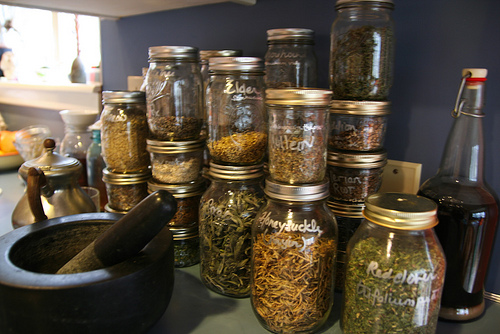
Mason jars for storage (and for any infusions or other medicines you may make)

Cheesecloth, a small and a medium sized sieve

Measuring spoons and cups

Gelatin capsules (for filling with powdered herb)

Plenty of blankets and towels

A hot water bottle (NOT an electric heating pad)

Olive oil and beeswax, in case you are up to making your own gentle salves

And – very important! A good veterinary herbal that can help you make choices about herbs and dosing them safely and effectively. I highly recommend Veterinary Herbal Medicine by Drs. Susan Wynn and Barbara Fougeres. It’s THE reference book for both  the home herbalist, and the clinician working with animals.

http://www.amazon.ca/Veterinary-Herbal-Medicine-Susan-Wynn/dp/0323029981

Next article I will take a look at conditions, and how  all the herbs in your starter kit can be used most effectively. Until then – hug your furfriends, and eat the weeds.

Cat

Herbs for Companion Animals – Ottawa Herb Society article

Healing Herbs for Animal Companions

The widespread petfood recalls of 2007 have been terrible to witness and  a revelation for millions, regarding the sorry state of commercial animal feed. Foods pet lovers had come to trust – even some of the better brands – were linked to poisonings, severe illness and death. Five years later, the original crisis has passed, but recalls (foods contaminated with aflatoxin, salmonella, excess Vitamin D and much more) continue to abound.   If anything positive can be said to have come from it all, it’s that more and more  dog and cat lovers have come to realize the  many problems associated with commercial foods, and begun to either purchase higher quality products, make their own food, or a combination of both. For me, as a clinical nutritionist working with mostly therapeutic diets for dogs, it’s been heartening to see the care people take to learn about nutrition and feed their best friends much better quality food. As an herbalist, I hope also to encourage more animal lovers to explore and become familiar with herbs for common canine, feline and equine conditions – both preventively and therapeutically.  While diet is known to contribute to all kinds of health issues from diabetes to cancer, so too can overuse of vaccinations, steroidal drugs, pesticides and antibiotics contribute to many degenerative diseases including epilepsy, arthritis,  a wide range of digestive issues, liver and renal disease, and cancer.

Many of these drugs can be minimized, or avoided entirely with careful use of plant medicine. Before just starting, however, there are a few key points to consider when working with animals. Chief among them are; metabolic uniqueness of other species, dosing, and method of administration.  These three concepts must always be considered and adjusted accordingly for the species and the individual.  Safe and effective use of herbs for animals begins  with these considerations.

Metabolic Uniqueness

Dogs, cats and horses, not to mention birds and reptiles –  break down, absorb and metabolize  plant constituents differently from each other, and from how we do. While it’s beyond the scope of this article to cover even a portion of these differences,  consider the feline sensitivity to salicylates (willow bark, meadowsweet) equine reaction to black walnut (toxic) and the canine predisposition to calcium oxalate crystals and stones ( many plants are high in oxalic acid).  Diets high in oxalate can negatively affect calcium absorption, and with many home made diets already borderline to low in this essential mineral, it’s important to watch the oxalate content of any herb given longterm. The idea here is to  know your species; for a herbalist familiar with plant use in humans, this can mean simply reading up on the specifics of the animal, their species, condition and breed. For someone starting out with herbs, it means learning the Constituents of the plant, as well as the animal’s unique tendencies and reactions. .Dosing too is critical here, as we consider how very much smaller (or larger!) our companion animals usually are. Once I have ascertained which plants I want to use for a specific animal, I will most often start almost homeopathically small, dosewise, unless we are facing an urgent scenario.  Beyond species and breed, individual dogs, cats, horses have widely differing metabolic rates. I work from the lowest –amount- needed principle. As with humans, many herbs are ineffective at too low a dose, very helpful at the right dose, and potentially toxic at too high. In general beginners should stay with that group of plants we consider safe. I’ll cover a few of these at the end of the article.

Delivery Method

This is a topic animal herbalists often disagree on;  I recently attended an AHG webinar with the acclaimed author Greg Tilford, who states categorically that glycerites are his favorite method of delivery, because they are well tolerated and can even be “squirted directly in the mouth”. With much respect for Tilford I use glycerites as a last resort. In my own practise, I’ve found low doses of alcohol-extracted tincture, well diluted, to be well accepted in food, and even higher ones if the food is particularly savoury. For herbs best delivered on an empty stomach, or for sensitive animals who won’t touch tincture, there are other options. I use freshly ground milk thistle directly in food as a hepatorestorative, for healthy dogs,  two or three times a year.  I make herbal honeys with many  plants, or pastilles which can be administered directly or in food, I infuse fresh and dried leaf and flower in water and ladle it into small meals throughout the day. Obviously, I don’t use honey or elixir with diabetics, alcohol tinctures with liver disease, or infused vinegar with some gastric disorders. The key here is to cultivate a wide range of tools in one’s kit and apply them with skill to the individual – again, species, but here, condition and compliance. The delivery method must suit the condition, the dose should start small and increase cautiously, and the animal has to accept the method. I have a cat with asthma who loves her complex respiratory (alcohol) blend right in her food. She’s always been a good eater, other cats will not even take a taste of  their favorite food if there’s a few drops of  tincture, but will accept a herbal honey or glycerite readily. There are multiple factors to consider when selecting one or more herbs for your companion animal. They can be challenging. But each one is a teacher.

Dosing

As with humans, animals can metabolize quite differently from one to another, with variations reliant on a number of factors.  My personal protocol is to familiarize myself with the veterinary dosing suggestions and work from the lowest to the point of efficacy – just as I would with a human. With many herbs, the range is huge with the safe and gentle healers most people use outside of clinical settings; consider the range for administration of dried Dandelion leaf; “ 50 –400 mgs per kg bodyweight,  divided daily” – that’s a wide range indeed. We must also consider the potential for an allergic response – it’s just as important with animals as with humans to take a good history if working clinically, or to bear in mind your own friend’s sensitivities before choosing herbs. Lastly, duration of the therapy will depend on whether the condition is acute or chronic, and I always dose for a week and then rest, unless working with very gentle trophorestoratives /tonics such as milky oats or hawthorn.

One guideline, which I may or may not use, is to dose by  using an amount proportionate to the human recommendation, if the dose for a 150 human is 15 drops BID and your dog weighs 30 pounds, use3-4 drops BID (of tincture). Because this method is safe, it is fine to use in most cases, but the risk is lack of efficacy. When I cover herbs for specific conditions, as well as on my blog, I will always provide a more precise dose and duration range. When in doubt, less is more, and check a good reference. I recommend Veterinary Herbal Medicine by Susan Wynn and Barbara Fougere for a clinical ,but reliable source of information.

Sources

This last section is personally important to me, as I have grown to prefer the use of local, abundant plants (for both human and animal medicine)  over the popular commercial herbs; some endangered, (slippery elm, goldenseal) others simply  come  from very far away (Devil’s Claw, most TCM formulas). While there are times when only a herb such as Goldenseal will do, in an overwhelming majority of cases, we have plenty of marvelous plants right here that can be used alone or in formula, with great result. I will discuss herbs for specific conditions in upcoming issues, but a brief overview here might be helpful. Some local and abundant plants I use all the time would have to include:

1)      Plantain, evening primrose,calendula and mallow (IBD, colitis, skin conditions)

2)      Hawthorn and Motherwort  ( cardiotonics)

3) Stinging nettle, goldenrod, ground ivy (allergy, kidney disease)

4) Dandelion, Burdock, Balmony (liver tonics)

5) Gravel root, mallows, agrimony, stinging nettle seed, corn silk, juniper berry, uva ursi, aspen ( kidney and bladder conditions)

6) Elderflower and berry, yarrow,elecampane, usnea, mullein (feline rhinitis, kennel cough in dogs, any viral or bacterial infection)

7) Goldenrod, mullein, elecampane, coltsfoot ( asthma, rhinitis, kennel cough)

8) Vervain, skullcap, milky oats,  wild chamomile,  wild lettuce, mullein, peach leaf,St. John’s Wort, rose ( anxiety)

9) Teasel root (Lyme disease)

10) White oak bark, self heal,  plantain,sage (periodontal disease)

11) Raspberry leaf, false unicorn, beth root, shepherd’s purse (uterine tonic)

12)  Bacterial diarrhea( blackberry root powder, raspberry leaf, wild garlic)

13) Comfrey, usnea, calendula, plantain, aspen, rose, St. Jon’s Wort  (wounds, bites, rashes and stings)

14) Male fern, mugwort, pineapple weed, elecampane,wild garlic  (internal parasites)

This is by no means an exhaustive list, nor does it imply that the commercial herbs have no place in our natural care for animals; certainly Devil’s claw, goldenseal, yucca, turmeric and assorted other plant healers from other parts of the world are indicated in many cases. Many holistic vets have taken an interest in Traditional Chinese Medicine, using herbs from very far away indeed. For the home herbalist wishing to replace or minimize veterinary drugs and chemicals with gentler methods, I like to emphasize the abundance and availability (and efficacy!) of local plants. In future articles I will look at common canine and feline issues, and how one can use herbs both preventively and therapeutically for each. Natural – gentle – and effective.

~*~*~*~*~*~*~*~*~*~*~*~*~*~*~*~*~*~*~*~*~*~*~*~*~*~*~*~*~*~*~*~*~*~*~*~*~*~*~*~*~